

• Member Login
  • |
  • Join Now
PESA - Energy Geoscience

Promoting Professional and Technical Excellence in Energy Geoscience – Networking, On-going Professional Education, Monthly Technical Meetings

  • Home
  • About
    • About PESA
    • Objectives
    • PESA History
    • PESA Affiliates
    • Constitution and Rules
    • Strategic Plan
  • Events
    • Online
    • NSW / ACT
    • QLD
    • SA / NT
    • VIC / TAS
    • WA
    • Industry
    • Social
    • Past Events
  • Membership
    • Join Us
    • APPEA Conference Discounts
    • AEGC 2025 Travel Bursaries
    • PESA Membership Awards
  • Latest News
    • All News
    • Feature Articles
    • Industry
    • Company Updates
    • Tech Talk (public)
    • PESA Branch Activities
  • Library
    • Technical Library
    • PESA Gazette
    • Webinars
    • PESA News Magazine
    • Knowledgette Recordings
  • Scholarships
  • Employment
    • View Job Opportunities
    • Submit Job
  • Contact

The Tectonic Stress Field in Eastern Australia

08/12/2001 by Sharperedge

The Tectonic Stress Field in Eastern Australia


Download Section

Please log in to download this file.

Alternatively, you can search for this item and individually purchase it from the PESA collection at AAPG DataPages

PESA collection at AAPG DataPages

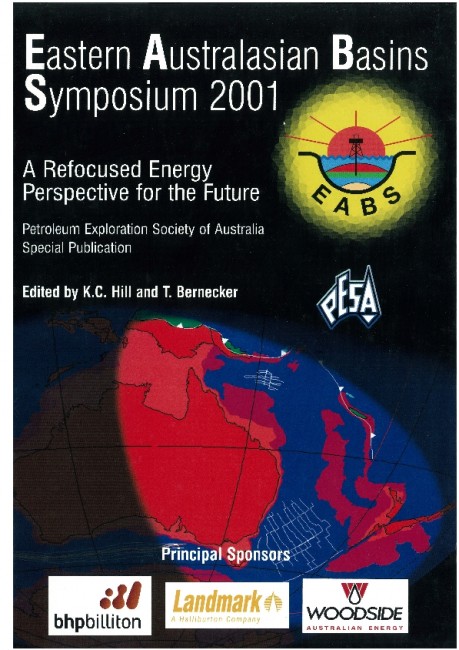
Publication Name: Eastern Australian Basins Symposium 2001

Authors: S. Zhao and R.D. M?ller

Date Published: November 2001

Number of Pages: 33

Reference Type: Magazine Article

Abstract:

Flexural analysis of geological structures in eastern Australia, based on gravity and topographic data, suggests that the flexural rigidity of the fold belts is about 3.6 - 4.4 x 10²² Nm. This corresponds to an effective elastic thickness of 16 - 17 km, which is nearly one order of magnitude less than that of cratons. The variation in the flexural rigidity reflects the difference in the mechanical strength of these geological structures.
To investigate the effect of the lateral heterogeneities in the lithosphere on local and regional stress fields, we construct a three dimensional fin ite element model (FEM) for the Australian continent with a spatial resolution of about 10 x 10 x 50 km, in which the major geological blocks/elements were included and the ridge push and plate
boundary forces were examined. The 30 FEM model provides a good fit to the in situ stress orientations in the Bowen Basin. In the Sydney Basin, this model can account for the in situ stress orientations within ?33?. Our
results suggest that the overall stress pattern may be controlled by ridge push and plate boundary forces, but the differences in mechanical strength of the geological structures, associated with lateral heterogeneities in the lithosphere, significantly perturb the maximum horizontal stress orientations as well as the associated stress patterns. In addition, three zones of stress concentration are predicted, which are generally consistent with the pattern of seismicity in the region. The technique described here could aid stress-dependent reservoir simulation
or the prediction of fault seal fai lure. In addition, it may also prove useful for preventing roof-collapse in coal mines, since orienting the longwall correctly in the local/regional stress fields is critical for strata control during development and longwall extraction.

Tags: Australia. eastern field Stress tectonic

PESA - Energy Geoscience

PESA Energy Geoscience is a non-profit association of individuals involved in the exploration of oil and gas.

Connect with us

Subscribe to our newsletter and stay on the loop of what is happening in the field of Energy Geoscience and events near you.

pesa newsletter
* indicates required

PESA Energy Geoscience will use the information you provide on this form to be in touch with you and to provide updates and marketing. Please confirm you give us permission to contact you via your email address:

You can change your mind at any time by clicking the unsubscribe link in the footer of any email you receive from us. We will treat your information with respect. For more information about our privacy practices please visit our website. By clicking below, you agree that we may process your information in accordance with these terms.

We use Mailchimp as our marketing platform. By clicking below to subscribe, you acknowledge that your information will be transferred to Mailchimp for processing. Learn more about Mailchimp's privacy practices.

Copyright © 2025 PESA - Energy Geoscience. All Rights Reserved.

  • Advertise
  • Contact
  • Policies
  • Privacy
  • Terms & Conditions