

- This event has passed.
2026 PESA WEBINAR SERIES: Linking Lithium, Water, and Policy: A Case-Based Framework for Sustainability Education (Sudeshna Basugupta)

Guest Speaker(s): Sudeshna Basugupta (University College London)
Dr. Sudeshna Basugupta is an Associate Professor (Teaching) in Sustainable Resource Management in the Department of Chemical Engineering at University College London (UCL). She is a geologist by training, with over two decades of experience spanning geoscience research, sustainability, and engineering education across India and UK.
Dr. Basugupta’s research combines expertise in natural resources, energy transition, and educational innovation. Her technical research has focused on the geological processes controlling the formation and evolution of natural resources, including rare earth element (REE)-bearing rocks such as carbonatites, as well as shales and other subsurface reservoirs relevant to sustainable resource development and energy transition.
Her teaching and educational research focus on sustainability education and the development of interdisciplinary learning approaches that integrate technical, environmental, and policy perspectives. At UCL, she has designed and leads courses including Geology for Sustainable Resource Management and Energy Transition and Sustainable Water Resource Management, supporting students from diverse disciplinary backgrounds.
She currently leads a UCL Global Engagement Fund project developing sustainability-focused educational resources on lithium extraction, water impacts, and policy integration through collaborative case studies in the United Kingdom and Türkiye. Through her work, she seeks to bridge geoscience, engineering and policy to equip students with the interdisciplinary skills needed to address emerging resource and environmental challenges.
2026 PESA Webinar Series
Kindly supported by Rock Flow dynamics 
The next webinar as part of the 2026 PESA Webinar Series will take place on Tuesday 1st September 2026.
This live webinar will take place at:
4pm – Perth
5.30pm – Darwin, Adelaide
6pm – Brisbane, Canberra, Hobart, Melbourne, Sydney
Use the calendar link on this page to add this event in to your own calendar at the correct local time for your location.
Tickets are free for members (please log in to see this) and $10 for non members.
Please buy your tickets and immediately follow the link in the ticket e-mail (not the calendar invite or this webpage, which is just generic and not event specific) to set up your registration with the webinar software well in advance of the time of the talk. Once registered with the webinar software you will receive a reminder e-mail 1 hour beforehand.
Linking Lithium, Water, and Policy: A Case-Based Framework for Sustainability Education
Presented by Sudeshna Basugupta (University College London)
Abstract:
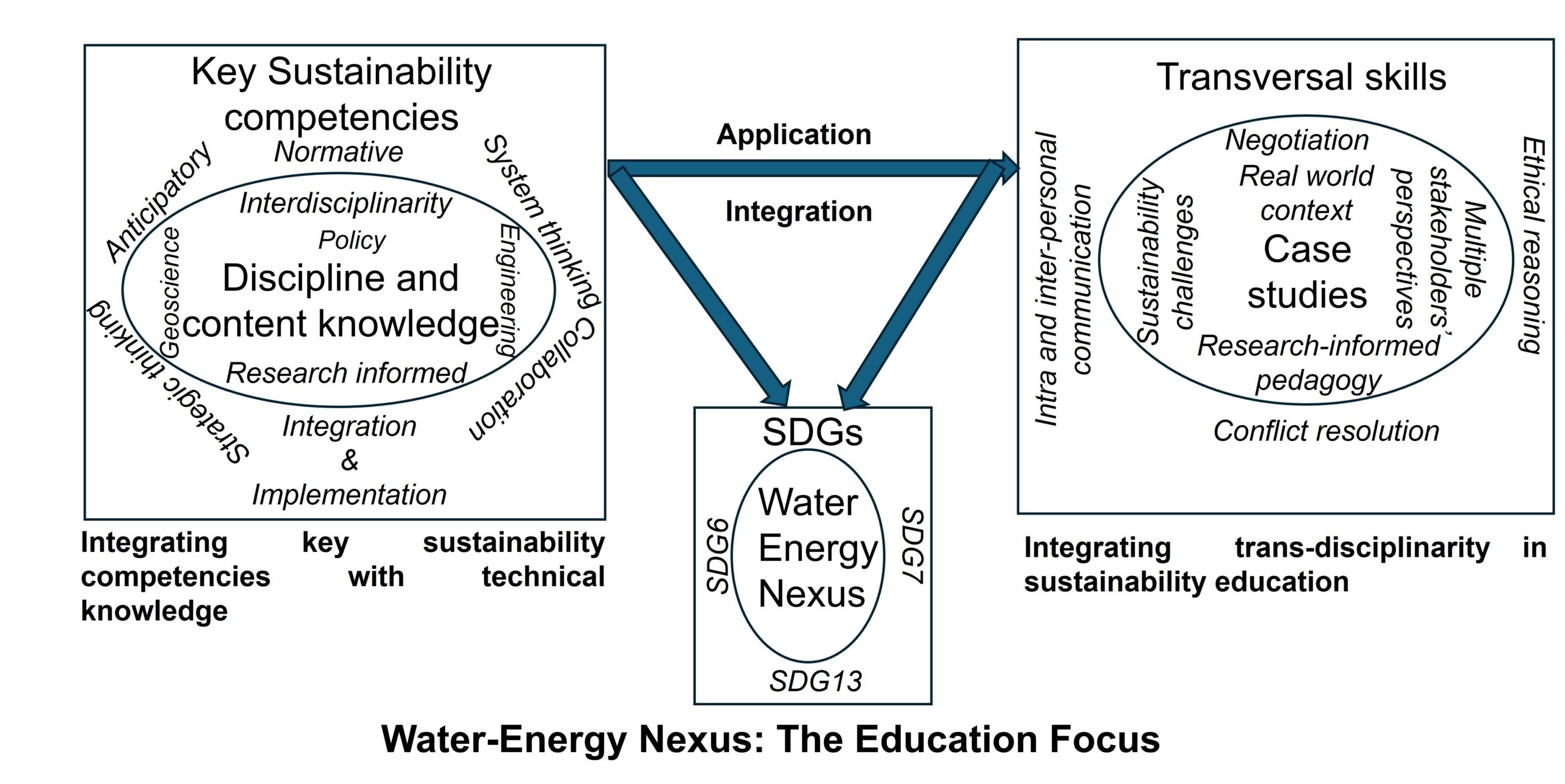
The increasing demand for lithium as a critical resource for energy transition technologies necessitates a comprehensive understanding of its environmental impacts, particularly on water resources. This study presents a pedagogical framework that integrates technical, environmental, and policy perspectives to support interdisciplinary sustainability education. Focusing on case studies from the United Kingdom and Türkiye, it explores how different lithium extraction pathways influence water consumption, water scarcity, and overall environmental sustainability across contrasting geological and regulatory contexts.
In the UK, lithium extraction is derived from both primary hard rock sources, such as lepidolite-bearing granites in Cornwall, and secondary geothermal brines. In Türkiye, the emphasis is on geothermal lithium production using Direct Lithium Extraction (DLE) methods, including adsorption, ion exchange, and membrane technologies. These approaches are compared with conventional evaporation-based techniques, which involve prolonged processing times and significant water loss.
Using water footprint assessment, the study evaluates total and freshwater use, brine abstraction, and associated environmental risks. By integrating insights from literature, industry, and policy sources, the project highlights trade-offs between extraction efficiency and water impacts. The resulting framework supports the development of interdisciplinary skills and aligns sustainability education with emerging industrial and policy needs.
Building on outputs from a Global Engagement Fund project and associated student research, This work provides an adaptable, practice‑oriented approach for strengthening sustainability‑focused education. It highlights opportunities for aligning curricula with emerging industrial, environmental, and societal needs.